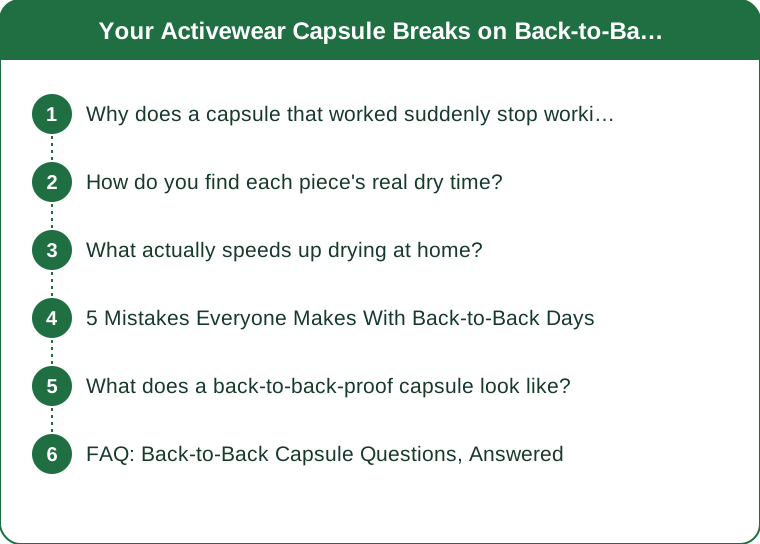
Your Activewear Capsule Breaks on Back-to-Back Days - Here's the Fix
Quick Answer: Most activewear capsules fail on consecutive training days because thick, brushed fabrics take 12 to 18 hours to dry indoors while thin technical knits take 3 to 6. If you train on back-to-back days, you need at least one fast-drying set per consecutive day in your streak - not more pieces overall, just the right pieces in the right ratio.
You did the math. Four bottoms, four bras, five tops, wash on Sunday. It worked perfectly until the week you trained Monday, Tuesday, and Wednesday in a row and found yourself pulling something damp off the rack at 6am. The capsule wasn’t too small. It was too slow.
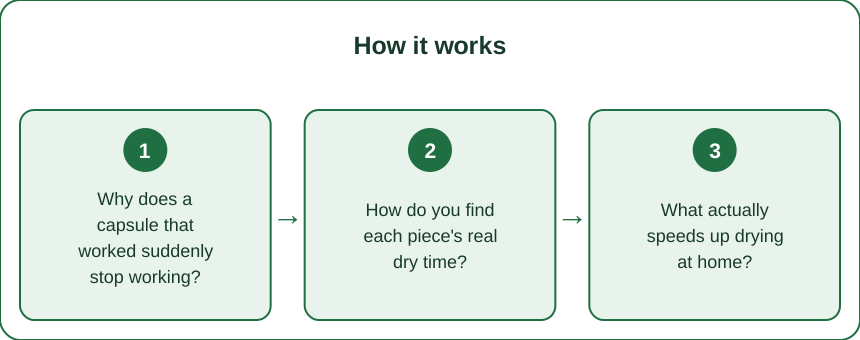
Why does a capsule that worked suddenly stop working?
Because piece count assumes even spacing, and real training weeks are lumpy.
A four-bottom capsule with training on Monday, Wednesday, Friday, and Saturday has 48 hours of drying time between most uses. The same four bottoms with training on Monday, Tuesday, Wednesday, and Saturday gives you a three-day streak - and if you hand-wash after each session, every piece in that streak needs to dry overnight.
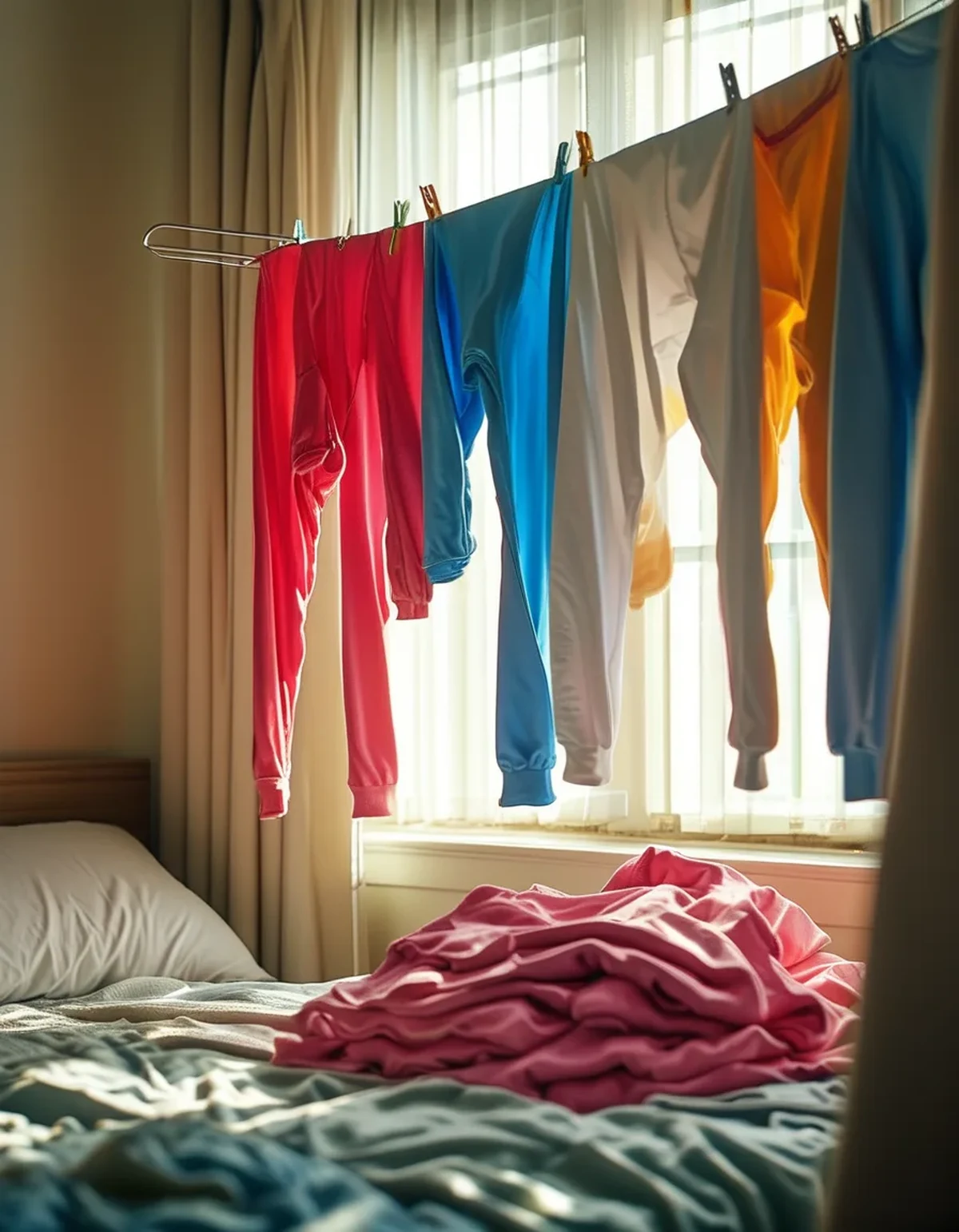
The variable nobody counts is dry time. A brushed high-compression legging hung indoors in humid late-summer air can still be cool to the touch at hour fourteen. A lightweight technical knit is dry in four.
So the honest capsule question isn’t how many pieces do I own. It’s how many pieces can be ready by tomorrow morning. Those are different numbers, and the gap between them is where the 6am panic lives.
How do you find each piece’s real dry time?
Test it once and you’ll never guess again. It takes one evening.
The overnight test. After your next wash, hang each bottom and bra separately at 9pm. At 7am, check the thickest seam - the waistband on leggings, the band and any padding on a bra. Seams and bands hold water long after the flat panels feel dry.
Sort what you own into three buckets:
- Fast (under 6 hours): thin technical knits, most running tights, unlined bras, mesh panels
- Medium (6-12 hours): standard mid-weight leggings, compression bras with a single layer
- Slow (12-18+ hours): brushed or buttery fabrics, anything with foam cups, thick waistband constructions, cotton blends
Most people discover their two favourite pairs are both in the slow bucket. That’s not a flaw in the leggings - it’s just information you didn’t have when you built the rotation.
The rule that comes out of it: for a streak of N consecutive training days, you need N pieces that are fast or medium, and slow pieces can only appear once per streak.
What actually speeds up drying at home?
The difference between a 14-hour dry and a 6-hour dry is mostly technique, not equipment.
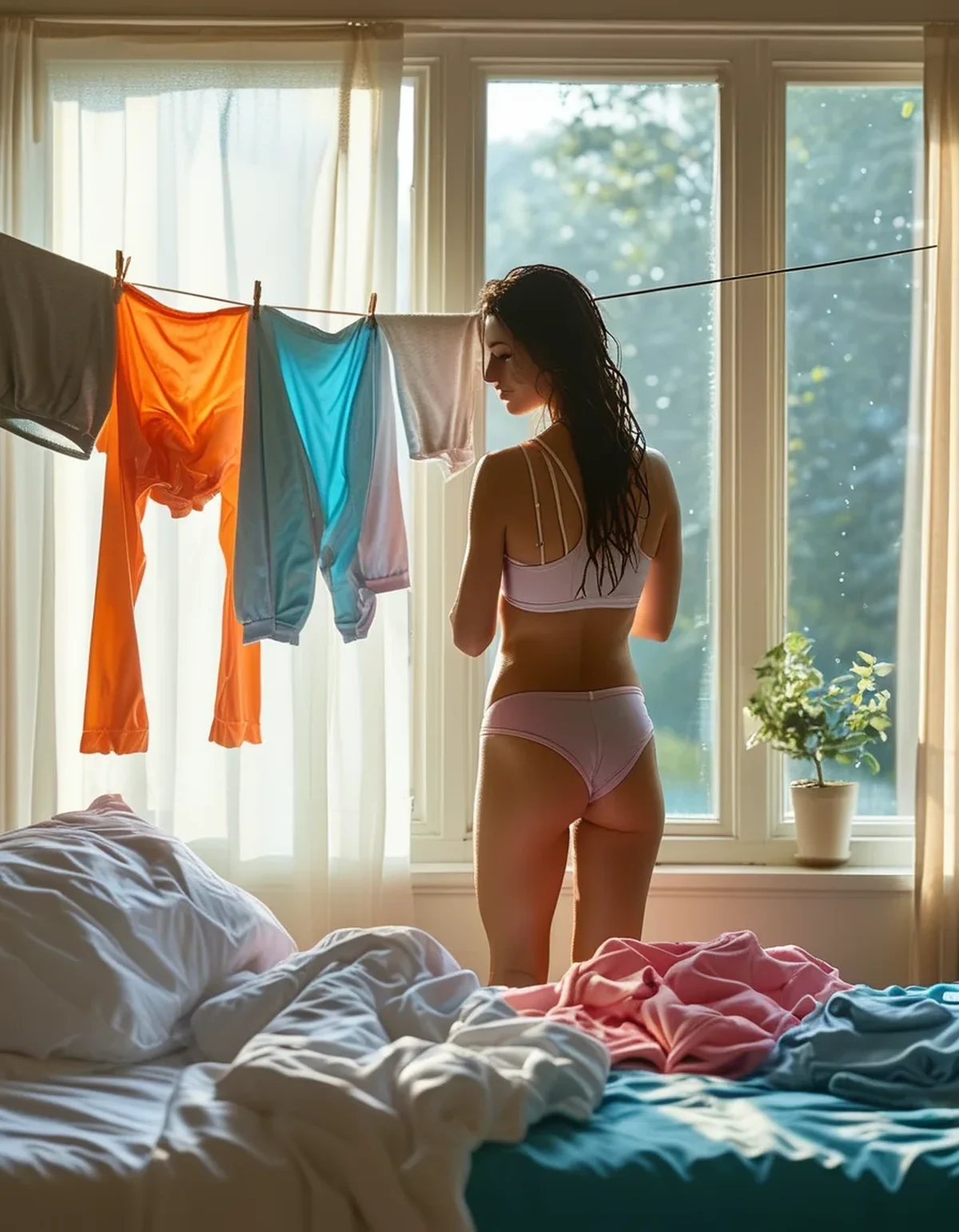
Roll, don’t wring. Lay the garment flat on a dry towel, roll the towel up with the garment inside, and press down along its length. This pulls out far more water than twisting, and twisting damages elastane. Thirty seconds of rolling can cut hours off drying.
Hang by the waistband, not folded over a bar. A pair folded in half over a rack rail has two damp layers pressed together at the fold, and that fold is the last part to dry. Clip the waistband so the whole garment hangs in one open layer.
Move air, not heat. A small fan pointed at the rack halves dry time on medium-weight pieces. A radiator or tumble dryer does dry them faster, but heat degrades elastane, which is what makes leggings lose recovery and go baggy at the knee. Airflow is free and doesn’t cost you the garment’s lifespan.
Don’t stack the rack. Pieces need a hand’s width between them. A crowded rack in a humid room can double the time on everything hanging on it.
5 Mistakes Everyone Makes With Back-to-Back Days
1. Buying a fifth pair of the same slow legging. You now own five pieces and still can’t cover a three-day streak, because they all dry at the same speed. Buy a fast pair instead - it does more work than a duplicate.
2. Re-wearing bottoms but not bras. People instinctively re-wear leggings and always wash the bra. It’s backwards for skin: the bra sits on skin under compression and holds sweat in the band. If anything gets the fresh piece on day two, it should be the bra.
3. Washing everything on the same cycle. Slow pieces put into the machine last come out last and start drying last. Wash the pieces you need tomorrow first.
4. Assuming the room is the same as last month. Indoor drying slows dramatically once you stop opening windows. The rotation that worked in July genuinely will not work in October, and this is the third mistake that catches even people who plan carefully.
5. Counting the top as a limiting piece. Tops are almost always fast-drying and you probably own plenty. Solving a bottoms-and-bras problem by buying tops is the single most common misdirected purchase in this category.
What does a back-to-back-proof capsule look like?
Here’s a 10-piece bottoms-and-bras core for someone who trains four to five times a week with at least one three-day streak.
Bottoms (5):
- 2 fast-drying (lightweight technical knit)
- 2 medium
- 1 slow favourite - the one you actually love, used once per streak
Bras (5):
- 2 fast-drying unlined
- 2 medium compression
- 1 high-impact with structure (usually slow - plan it for the first day of a streak so it has the longest runway)
That covers a three-day streak twice over without a single damp morning, and it’s the same number of pieces most people already own. The change is in the mix, not the total.
As the weather cools and indoor drying slows, shift the ratio one notch: swap one medium bottom for a fast one. You’ll feel the difference the first week the heating comes on and everything suddenly takes three hours longer.
FAQ: Back-to-Back Capsule Questions, Answered
Can I just re-wear leggings for a second session?
For a low-sweat session, yes - hang them to air fully first, and don’t fold them into a bag damp. For anything that soaked through, re-wearing traps bacteria against skin and is the main cause of the odour that never washes out.
Is a dehumidifier worth it for drying activewear?
If you dry indoors in a small space, it’s the single most effective upgrade - often more effective than a fan, because it lowers the humidity ceiling rather than just moving air. It also protects the fabric in a way a dryer doesn’t.
Do quick-dry fabrics wear out faster?
Not inherently. Thin technical knits show pilling sooner in high-friction areas, but their elastane lasts as long as anything else if you keep them out of heat.
How do I handle a training camp or a week of daily sessions?
Wash daily rather than batching, and treat it as five one-day problems instead of one five-day problem. Daily rolling and hanging beats owning seven of everything.
TL;DR:
- Consecutive training days break capsules through drying time, not piece count
- Test your own pieces once: fast (under 6h), medium (6-12h), slow (12h+)
- One slow piece maximum per consecutive-day streak
- Roll in a towel, hang by the waistband, add airflow - skip the heat
- As indoor humidity rises with cooler weather, shift one piece from medium to fast
The fix here costs almost nothing, which is why it gets overlooked. Sort what you already own by how fast it dries, plan the streak around the slow favourite instead of against it, and the 6am damp-legging problem quietly disappears.
See It in Motion
Seen here: High Waist 8” Yoga Shorts — shop similar styles on bubblelime.com
Keep Reading
This article is for general informational and styling purposes only. Fit, sizing, and product availability may vary.