How to Rebuild an Activewear Capsule After Your Body Changes (Not the Season)
Quick Answer: Rebuild in three passes, not one. First, sort by what fits your body today - not by what you paid or what you hope. Second, identify the two or three pieces you actually reach for and replace only those in the new size, which usually costs 4 to 6 items rather than a whole drawer. Third, hold the near-miss pieces in a separate bin for 90 days with a written review date, then donate whatever you did not open. Rebuilding by function beats rebuilding by size chart every time.
Every capsule article assumes the only thing that changed is the weather. Then postpartum happens, or a lifting phase, or perimenopause, or a medication, and suddenly a drawer of perfectly good leggings is a drawer of daily small disappointments. This is the rebuild that nobody writes: same principles, different starting point.

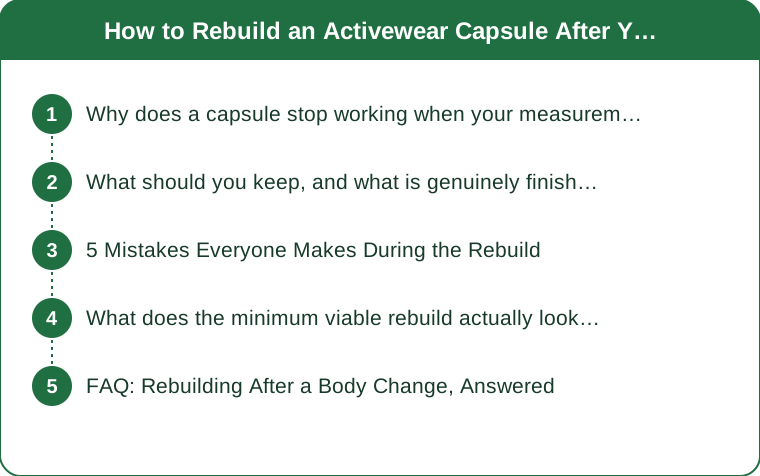
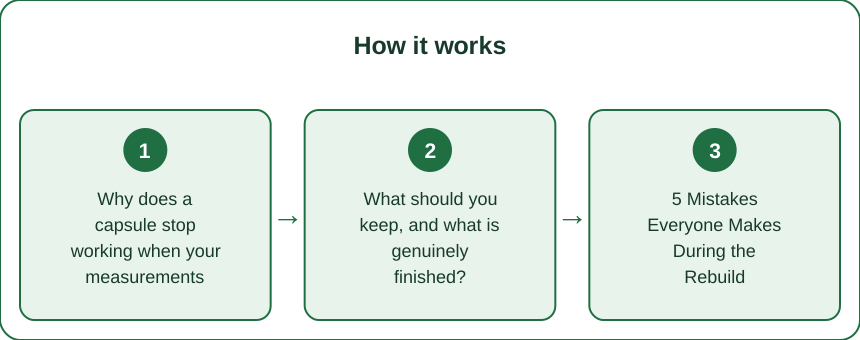
Why does a capsule stop working when your measurements change?
Because a capsule is a system of matched pieces, and systems fail at the joints. A working capsule assumes the leggings tuck under the tanks, the tanks sit right under the jackets, and everything shares a palette. Change one dimension and the failures cascade - the tank that now rides up makes three jackets unusable because you no longer want to take the jacket off.
And the failures are rarely uniform. Bodies do not scale evenly. A rib cage change hits sports bras and fitted tanks while leaving leggings fine; a hip or thigh change does the reverse. Most people experience this as everything is wrong when in fact one category is wrong and it is poisoning the rest.
This is why the first move is a category audit, not a purge. Take twenty minutes and sort the drawer into four piles: bottoms, bras, tops, layers. Try one representative item from each category. In the overwhelming majority of body changes, one or two of those four piles is the actual problem. That is a $150 fix, not a $600 one.
The emotional part deserves naming. Clothes that no longer fit are an unusually loud daily message, and keeping them in the primary drawer means receiving that message every morning before coffee. Getting them out of the daily line of sight is not denial - it is removing a pointless recurring tax on your mood.
What should you keep, and what is genuinely finished?
Judge every item against how it performs now, in one wear.
Keep: anything that works with adjustment. Drawcord waistbands, adjustable straps, wrap and tie details, oversized layers, and anything with real four-way stretch usually spans a size and a half comfortably. These are the pieces that quietly survive body changes, and they are worth noticing so you buy more of them next time.
Keep: outer layers, almost always. Jackets, zip-ups, and pullovers are the most size-forgiving category in the drawer. They also carry most of the visual identity of an outfit, which is why a capsule can look intact through a change if the layers survived.
Finish: anything that fails the movement test. Put it on and do a squat, a forward fold, and a reach overhead. Sheerness at the bottom of a squat, a waistband that rolls on the fold, a band that digs on the reach - these are not break-in issues; they are the fabric telling you the fit math no longer works. No amount of styling fixes compression that is now working too hard.
Finish: the pieces you now dress around. If the tank only works under the one jacket and the leggings only work on lower-body days, you own a constraint, not a garment.
Hold, do not decide: the near-misses. One bin, labeled with a date 90 days out. Bodies in transition move again, and the postpartum or post-diagnosis or seasonal-shift version of you in three months might be the exact size these fit. Keeping them out of the drawer while keeping them in the house is the compromise that stops both the daily reminder and the expensive regret.

5 Mistakes Everyone Makes During the Rebuild
Mistake one: replacing the whole drawer at once. The single most expensive error, and it happens when the body is still moving. Buy the two or three pieces you wear weekly, wear them for a month, then decide. A drawer bought in one panicked afternoon usually contains four items you love and eleven you tolerate.
Mistake two: buying to the number on the old label. Size labels are brand fiction and they drift year over year. Measure - bust, underbust, waist, hip - and buy to the chart. If you are between sizes on the chart, buy for the largest measurement and let the stretch handle the rest.
Mistake three: keeping the aspirational pair in the front of the drawer. The pair you are working back into belongs in the bin with a date, not at eye level. Front-of-drawer real estate goes to things you can put on without a negotiation.
Mistake four: replacing like for like. The change is an opportunity to fix the things that annoyed you about the old capsule - the color that matched nothing, the waistband height you never liked, the fabric that pilled by month three. Rebuilding to an exact copy of a wardrobe you had mixed feelings about is a wasted reset.
Mistake five: skipping the sports bra. It is the least fun purchase and the one that most determines whether you feel put together. Rib cage measurements change with weight, pregnancy, cycle phase, and time; band size drives comfort far more than cup size does. If you rebuild one category properly, make it this one.
What does the minimum viable rebuild actually look like?
You need fewer pieces than the internet suggests. A functional restart is:
Two bottoms in the current size. One full-length, one shorter or looser - covering the range from a cold morning walk to a hot studio. Same color family so both work with everything above.
Two tops that fit without management. One fitted, one relaxed. The relaxed one is doing emotional work as much as physical work during a transition, and that is a legitimate design requirement.
One correctly fitted sports bra, ideally two if the budget stretches, because laundry timing is real.
One layer, which you almost certainly already own from the keep pile.
That is six pieces, roughly four of which need buying, and it covers a full week with normal laundry. Everything beyond it is optimization you can do slowly, at full attention, with actual enjoyment - which is the opposite of how the panic-buy version goes.
Then set a review date. Put it in the calendar 8 to 12 weeks out. If the body is still moving, you are not behind; you are correctly waiting. If it has settled, that is the moment to fill in the fun pieces - the print, the color, the second jacket.
One quiet upside worth mentioning. People who rebuild after a change almost always report the new capsule fits their life better than the old one did, because they bought for the training they actually do now instead of the training they did three years ago. The change forced an audit that most wardrobes never get.
FAQ: Rebuilding After a Body Change, Answered
How long should I wait before buying a new size?
If you are in an active transition - postpartum, a medication change, a deliberate gaining or cutting phase - buy only the two or three pieces you need weekly and wait 8 to 12 weeks for the rest. If the change has been stable for two months, buy normally.
Should I keep clothes that no longer fit?
Keep the near-misses in a dated bin outside the daily drawer for 90 days; let go of anything that fails the squat, fold, and reach test, since fabric that is over-stretched will not recover. The daily reminder of items you cannot wear costs more than the items are worth.
What is the most size-forgiving activewear to buy during a transition?
Drawcord waistbands, adjustable straps, wrap details, relaxed tops, and outer layers. High-stretch, high-recovery knits span roughly a size and a half; heavily compressive fabrics and structured bands span almost nothing.
How do I stop feeling bad every time I open the drawer?
Remove the non-fitting pieces from the drawer entirely. It sounds trivially simple and it is the highest-return step in the whole process - a drawer where every item works removes a dozen small negotiations per week.
TL;DR:
- Audit by category, not by drawer - most body changes break only one or two of the four categories, so the real fix is smaller than it feels.
- Keep the adjustables and the layers, finish anything that fails the squat, fold, and reach test, and hold near-misses in a dated bin outside the daily drawer.
- The minimum viable rebuild is about six pieces, four of them new; buy those, wear them a month, then decide on everything else.
- Buy to your current measurements against the brand chart, not to the number on the old label.
- Set a review date 8 to 12 weeks out so waiting feels like a plan rather than procrastination.
A capsule is supposed to reduce decisions. When your body changes, the system needs a service, not a demolition - fix the broken joint, keep the parts that still work, and let the rest wait for the version of you who shows up in three months.
See It in Motion
Seen here: Racerback Tank Top - White — shop similar styles on bubblelime.com
Keep Reading
This article is for general informational and styling purposes only. Fit, sizing, and product availability may vary.