Your Capsule Has a Shoe Problem: The Rotation Nobody Plans
Quick Answer: Most people need two pairs, not one and not six: a stable flat-ish trainer for lifting and gym classes, and a cushioned running shoe for anything with repeated impact. Add a third only if you do a court sport or hike. Rotating two pairs also gives the midsole foam 24 hours to decompress, which measurably extends how long each pair stays supportive.
You spent a weekend auditing the drawer. Leggings sorted, bras counted, colours matched. And then you walked out in the same trainers you wear for lifting, running, walking the dog, and the school run.

Why does one pair of trainers fail across different sessions?
Because a shoe is a tool with a shape, and the shape that helps one session actively hurts another.
A cushioned running shoe has a soft, tall midsole and usually a heel that sits 8 to 12mm above the toe. That stack absorbs repeated impact beautifully. Put it under a heavy squat or a lateral shuffle and the same softness becomes a wobble - you are standing on a compressible platform while trying to be stable.
A flat, firm training shoe does the opposite. A 0 to 6mm drop and a dense sole give you a floor to push against, which is exactly what you want for lifting, step-ups, and most class formats. Run five kilometres in it and your shins will tell you what it lacks.
So the single-pair approach means you are always in the wrong shoe for half your week. The symptoms are specific and easy to misread:
- Shin or knee soreness after running in a flat training shoe
- Feeling unstable or rolling outward during squats or lunges in a soft running shoe
- Toe-box crowding in a running shoe used for lateral movement, because running shoes are built for forward travel only
None of that means your legs are the problem.
How many pairs does a real capsule need?
Two, for the overwhelming majority of people. Three if a court sport or trail is a weekly fixture.
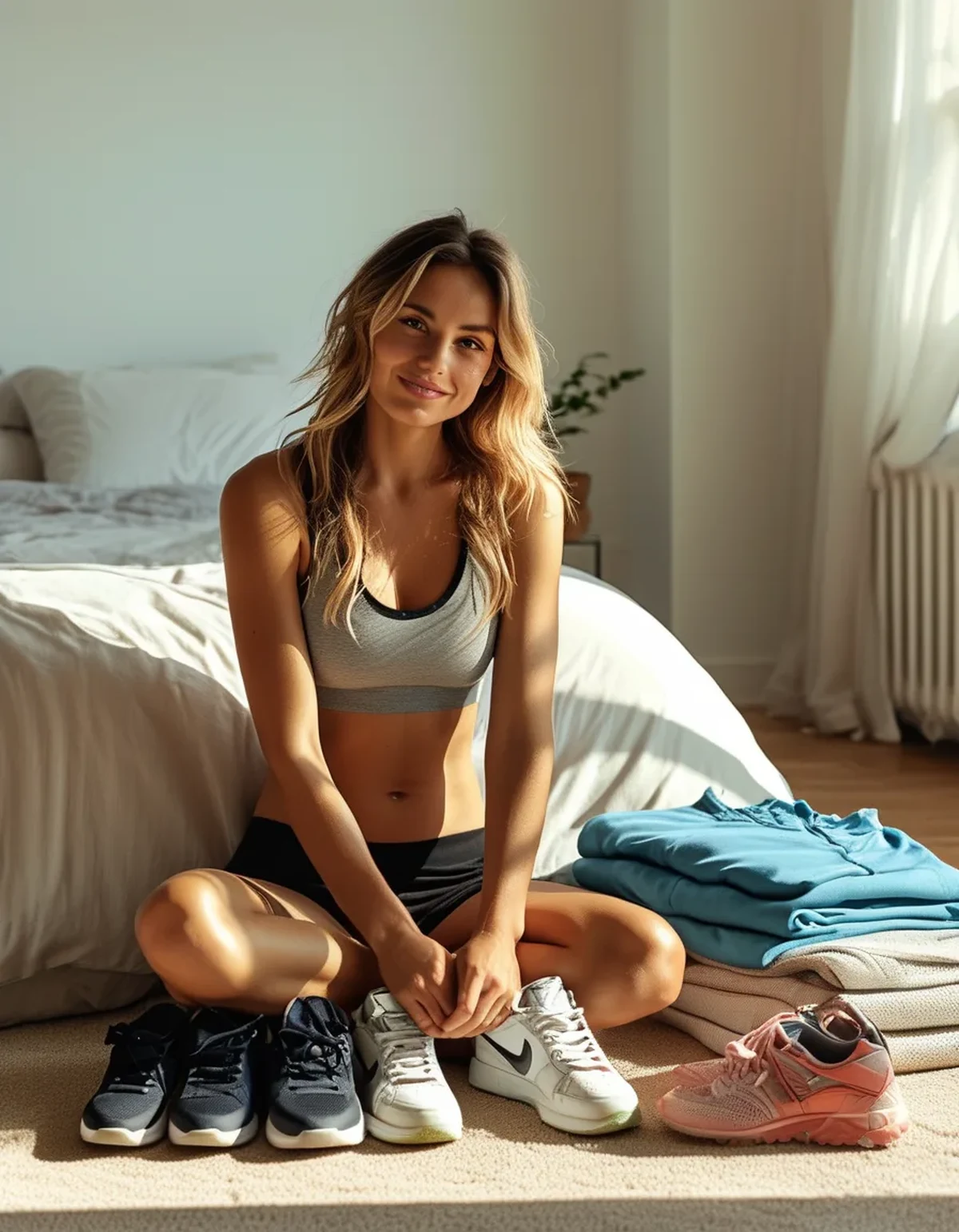
Pair 1 - the stable trainer. Low drop, firm sole, a bit of width at the forefoot. Used for strength sessions, HIIT classes, walking, and general wear. This is your default and it gets the most days.
Pair 2 - the cushioned shoe. Higher stack, softer foam, built for repeated impact. Running, treadmill intervals, long walks on pavement. If you run at all, this is not optional.
Optional pair 3 - the sport-specific one. Tennis, netball, and pickleball shoes have reinforced lateral support and a sole pattern built for sliding stops. Trail shoes have grip and a rock plate. If you play or hike weekly, the generic trainer will not cover it and the injury risk is real rather than theoretical.
What you do not need: a separate shoe for each class name on the timetable. Barre, pilates, and most mat work are done barefoot or in grip socks anyway.
The honest test is your own diary. Write down the last twelve sessions you actually did. If ten of them were strength or walking and two were runs, you own the wrong shoes if you have three pairs of running trainers and nothing firm.
What does rotation actually do for the shoes?
This is the part most capsule advice skips, and it is where two pairs quietly pay for themselves.
EVA and TPU midsole foams compress under load and then recover slowly. Recovery is not instant - it continues for hours after you take the shoe off. Wearing the same pair on back-to-back days means the foam starts the second session already partly flattened, so you get less cushioning from a shoe that has not yet worn out in any visible way.
Give a pair roughly 24 hours between wears and you are training on foam closer to its actual spec. Two pairs alternated also means each pair covers fewer total kilometres per month, so both last longer in calendar terms even though the total mileage is unchanged.
The second benefit is drying. A shoe worn in an August session is genuinely wet inside. Damp foam and damp fabric break down faster, and the smell is a bacterial problem rather than a washing problem.
Practical rotation rules:
- Alternate rather than assigning days - whichever pair is dry and matches the session
- Never dry them on a radiator or in direct sun; heat degrades adhesives and warps the midsole
- Pull the insoles out after sweaty sessions so both surfaces dry
- Store them out of the gym bag, because a closed bag keeps everything damp
Myth vs Fact: Workout Shoes in a Capsule
Myth: A more expensive shoe lasts proportionally longer. Fact: Price mostly buys weight savings and upper materials. Midsole lifespan tracks the foam type and your body weight and mileage, not the price. A mid-range shoe rotated properly outlives a premium one worn daily.
Myth: You should replace running shoes every 500 kilometres, full stop. Fact: That number is a rough midpoint of a very wide range. Heavier runners and firmer foams sit lower, lighter runners and modern supercritical foams sit higher. The better signal is how the shoe feels in the last kilometre and whether the outsole is worn through at the heel or forefoot.
Myth: Cross-trainers cover everything, which is the point of them. Fact: They cover strength work and mixed classes well. They are a compromise for running by design, and most brands say so quietly in their own product copy.
Myth: If the upper still looks new, the shoe is fine. Fact: The upper almost always outlasts the midsole. A shoe that looks pristine can be fully flat underneath, which is precisely why people keep running in dead shoes and blame their knees.
Myth: Two pairs means twice the spend. Fact: It means the same spend spread differently, and usually a longer replacement interval on both pairs. The cost per wear tends to come out lower, not higher.
How do you fold shoes into the capsule without over-buying?
Buy in the order your week demands, and buy one pair at a time.
Step 1 - identify the majority session. Whatever you do most often gets the first, best-fitting pair. For most people that is strength or walking, which means the stable trainer comes first.
Step 2 - buy the second pair only when the second activity is real. If running is something you intend to start in September, wait until you have run three times in the trainers you own. Aspirational shoes are the single most common dead item in a shoe rack.
Step 3 - size for late afternoon. Feet swell across the day and swell further in heat. A shoe fitted at 9am in August will feel tight by evening. Leave roughly a thumb-width of space in front of the longest toe.
Step 4 - retire on function, not appearance. When the flat trainer starts feeling squishy under a heavy set, or the running shoe stops feeling springy in the last kilometre, that pair moves to dog-walking duty and the replacement gets bought.
Step 5 - keep the retired pair for exactly one job. One demoted pair for muddy walks is useful. Three demoted pairs is a rack problem, and the old ones get grabbed on rushed mornings, which puts you back in flat foam for a run.
FAQ: Activewear Capsule Shoe Questions, Answered
Can I lift in running shoes if that is all I own?
You can, for lighter and machine-based work. For heavier squats, deadlifts, and lunges, the soft heel makes stability harder. A cheap flat option in the meantime is a plimsoll-style shoe or, where the gym allows it, going barefoot or in socks for hinge patterns.
Do I need different shoes for treadmill and outdoor running?
No. The surface differs but the movement does not, so one cushioned pair covers both. Outdoor use wears the outsole faster, which is a lifespan difference rather than a shoe-type difference.
How do I tell if my shoes are actually dead?
Press your thumb into the midsole under the heel. Fresh foam rebounds; dead foam feels dense and stays dented. Also look at the outsole - if the tread is smooth through to the foam in one patch, that pair is finished regardless of mileage.
Are two identical pairs a valid rotation?
Yes, and it works well if your sessions are all one type. You get the foam-recovery benefit without learning a second fit. It only fails if your week actually contains two different demands, in which case you own two of the wrong shoe.
TL;DR:
- Two pairs covers most people: one stable flat-ish trainer, one cushioned shoe for impact
- Add a sport-specific third pair only for weekly court sports or trail
- Alternating pairs gives midsole foam about 24 hours to recover, so both last longer in calendar terms
- The upper outlasts the midsole - judge by thumb-press rebound and outsole wear, not looks
- Buy the majority-session shoe first, and never buy for a habit you have not started yet
Shoes are the part of the capsule that gets audited last and matters most, because they are the only piece that changes how a movement loads your joints. Fix the rotation and a surprising number of vague shin, knee, and stability complaints quietly stop being a mystery.
See It in Motion
Seen here: Super High Waist Embossed Yoga Leggings with Inner Pocket — shop it on bubblelime.com
Keep Reading
This article is for general informational and styling purposes only. Fit, sizing, and product availability may vary.